
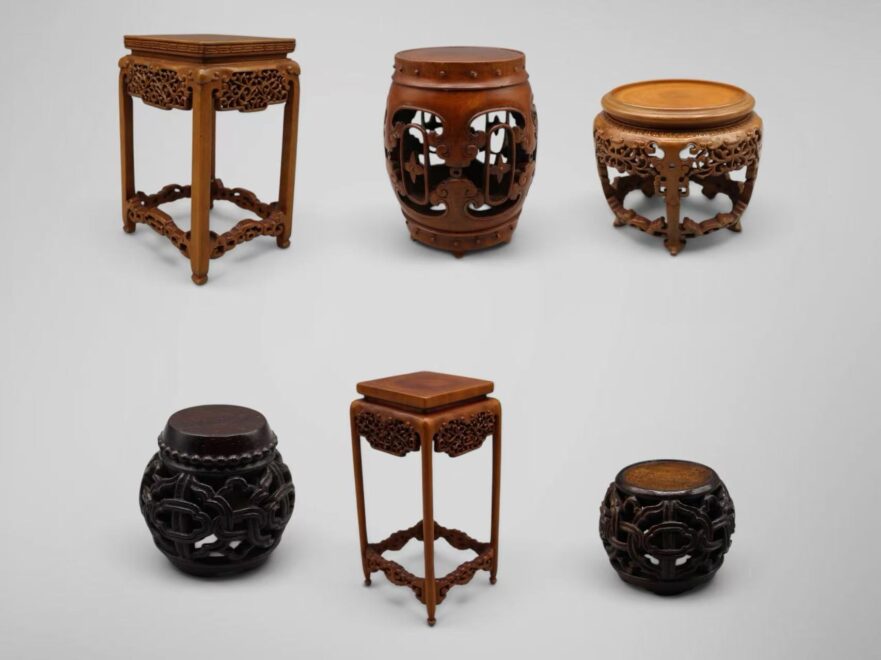
CHINESE MINIATURE WOODEN FURNITURE 中国古代微型木质家具
In the popular imagination, Chinese classical furniture is renowned for the fluid lines of the Ming style and the grand majesty of the Qing style. Yet, within the brilliant galaxy of traditional Chinese woodworking, exists a category of artifacts often cherished by connoisseurs as the “jewel in the palm”—miniature furniture.
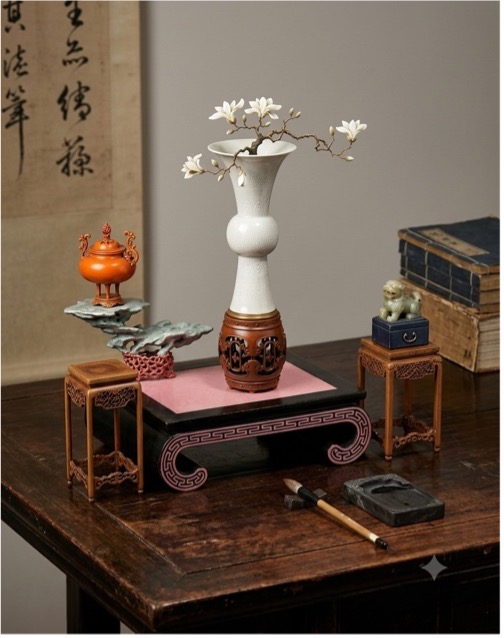 These exquisite, petite objects are far from mere toys. They are masterfully crafted art pieces, scaled down in precise proportions while strictly adhering to the authentic joinery, material selection, and carving techniques of full-sized furniture. Today, we explore the Chinese aesthetics embedded within this micro-universe and their unique role in the lives of ancient literati.
With a rich history, Chinese miniature furniture served diverse cultural functions across different historical epochs. According to historical texts and archaeological excavations, they primarily functioned in the following capacities:
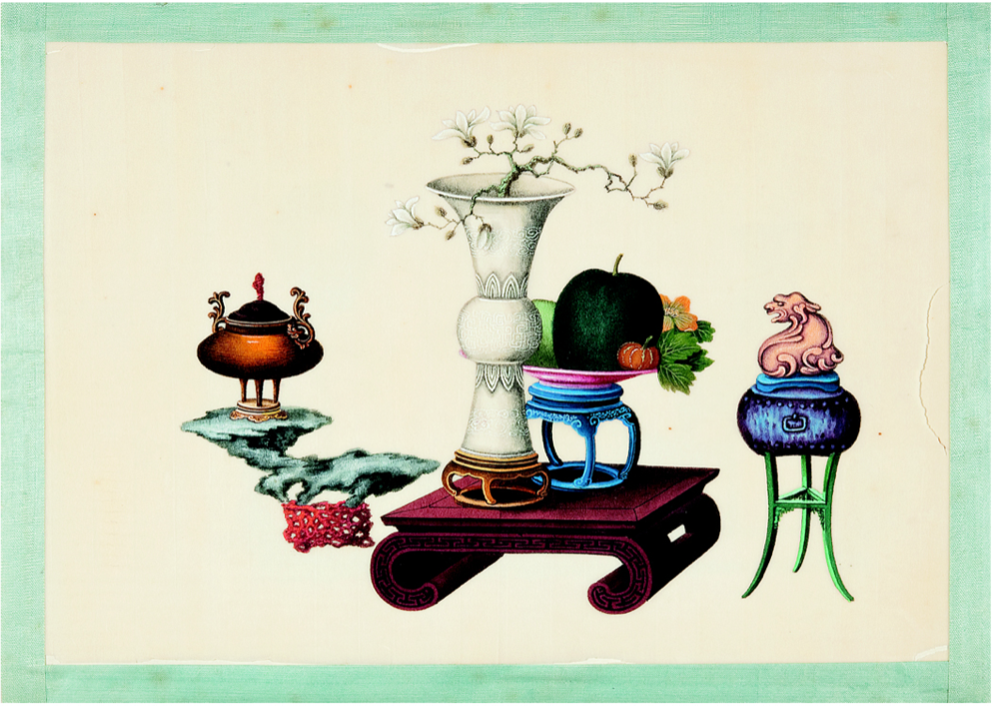
Scholar’s Objects: The most elegant destination for miniature furniture. During the Ming and Qing dynasties, scholars placed great emphasis on the intellectual atmosphere of their studios and desk displays. Proportionately scaled-down scholar’s lamps, official’s hat chairs, recessed-leg tables, or flower stands were frequently placed on writing desks to serve as ornamental bases for seals, scholars’ rocks, fine porcelain, or scholars’ stationery.
Collectors’ Art: Superior miniature furniture served as a master artisan’s “calling card” to showcase ultimate craftsmanship. Due to the diminutive scale, executing precise mortise-and-tenon joinery (such as flush corner joints or giant’s arm braces) and intricate openwork carving within a fraction of an inch demanded far greater eyesight and patience than creating full-sized pieces.
Models and Funerary Objects: In ancient times, certain miniature pieces served as burial goods (mingqi) or as scale models for architectural and bespoke furniture commissions, utilizing them to demonstrate the owner’s status or for drafting and refining design schematics.
The Distinctive Miniature Wooden Garden Seat
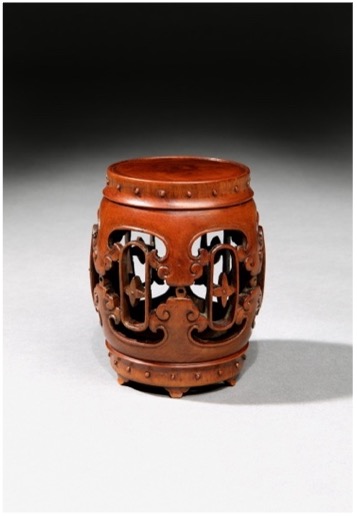
Among the diverse array of miniature furniture collectibles, the most eye-catching and connoisseurship-demanding piece is undoubtedly the miniature wooden garden seat (traditionally referred to as zuodun, xiudun, or gudun).
In ancient China, authentic, full-sized garden stools were predominantly crafted from blue-and-white porcelain, famille-verte porcelain, or stoneware to withstand weathering in courtyards, gardens, or pavilions. Consequently, in the realm of miniature craftsmanship, a pure wooden miniature garden stool is exceedingly rare, surpassing others in both manufacturing difficulty and collectible value. Artisans had to utilize jade-like hardwoods to cross over and replicate the rounded contours and openwork aesthetics originally native to porcelain.
Though measuring only a few inches high and fitting comfortably in the palm of a hand, these miniature wooden stools perfectly replicate all the core technical features of large-scale Ming and Qing furniture:
Cross-Medium Replication of Form and Structure: These miniature seats mostly emulate the classic “drum stool” (gudun) profile—cylindrical with a gently bulging waist. In traditional woodworking, fashioning hard timber into a fluid, plump, and perfectly symmetrical bulging body requires superlative “turning and rounding” skills. Any minor deviation in miniature turning or polishing would instantly deflate the spiritual resonance of the stool’s silhouette.
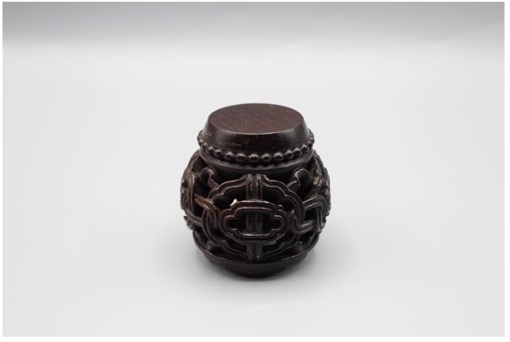
Openwork and Lattice Designs: While original porcelain stools featured pierced openings for ventilation, the wooden miniature versions elevated this design into the realm of ultimate carving art. Utilizing precise fretsaw cutting and chiseling on the diminutive body, artisans created
Simulated and Archaic Structural Detailing (Carved Panels): A closer inspection of the upper and lower rims of these miniature garden seats reveals a row of uniformly spaced, small bosses—known as “boss decorations” or “drum nails” (guding wen). This detail originates from the ancient Chinese tradition of stretching leather over drums and securing it with nails. Hand-carving these plump, rounded drum nails one by one out of dense hardwood is not only a homage to ancient ritual vessels but also endows the tiny seat with a three-dimensional, tactile beauty.
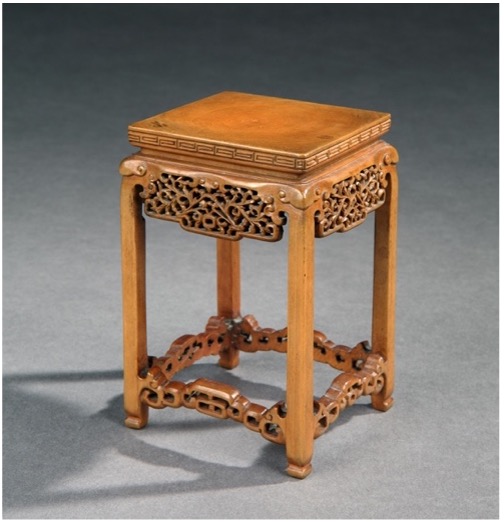
Ornate Small Tables and Precious Hardwoods
Beyond garden seats, the scholar’s desk was frequently adorned with miniature small tables, which demanded an even higher standard of material selection. To bring these diminutive masterpieces to life, artisans relied on elite hardwoods that could withstand intricate, micro-scale carving:
Boxwood (Huangyangmu): Renowned for its extreme density, boxwood is very hard and incredibly difficult to carve. However, its tight grain allows for flawless, microscopic detailing. Over decades of appreciation and handling, it develops a fantastic patina, transforming into a warm, amber-like hue that connoisseurs deeply prize.
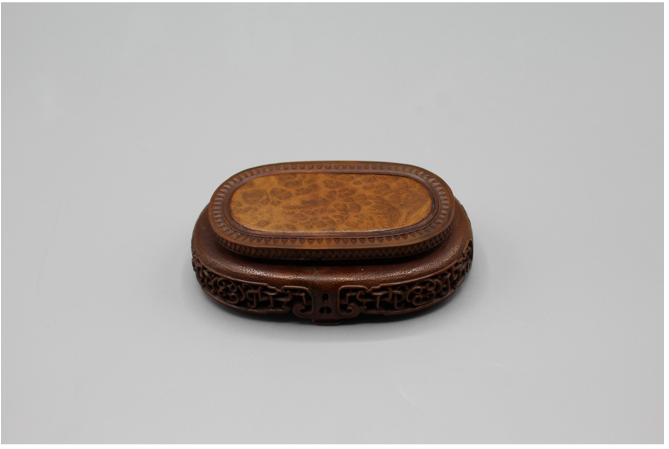
Zitan and Hongmu: For the most prestigious commissions, master craftsmen turned to Zitan (a dense, dark luxury hardwood) and Hongmu (traditional red rosewood). These materials lend a natural weight, deep luster, and historical gravity to the miniature tables, ensuring they command the same presence as their full-sized counterparts.
Ornate Patterns: These small tables often feature exquisite, low-relief carvings of botanical or geometric designs, such as the classic wintergreen or interlocking floral scrolls, pushing the boundaries of what hands can achieve within a fraction of an inch.
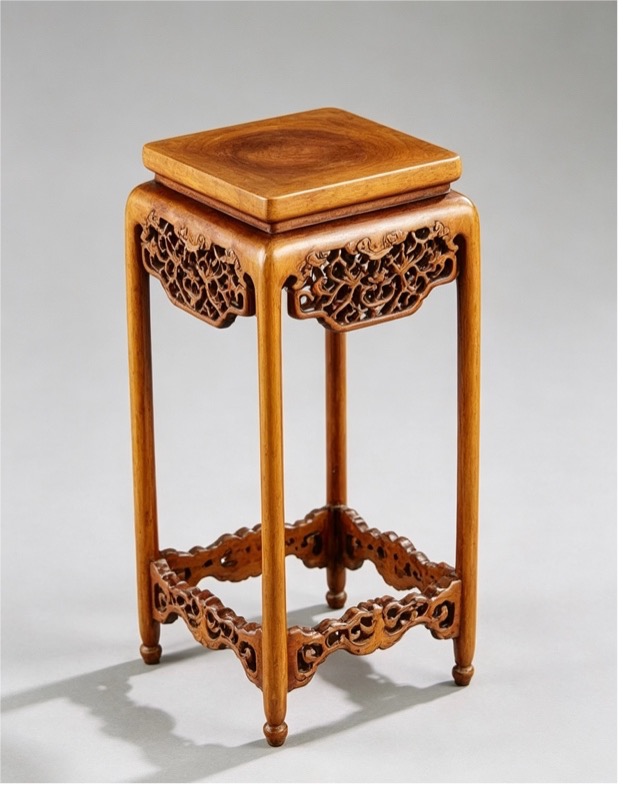
Provenance: Recorded in the Spink & Son exhibition catalogue The Minor Arts of China, London, March 1983 (No.23)
著录:记载于斯宾客1983年3月的展览图录《中国工艺微珍》,藏品编号:23
在人们的普遍印象中,中国古典家具向来以行云流水的明式风格和雄浑大气的清式风格而闻名于世。然而,在中国传统木作工艺的璀璨星河中,还存在着一类常被藏家奉为“掌上明珠”的器物——微型家具(袖珍家具)。
这些精致小巧的物件绝非单纯的玩具。它们是高超的艺术品,在严格遵循足尺家具的真实榫卯结构、选材以及雕刻工艺的同时,按精确比例缩微而成。今天,我们就来一同探索深藏在这片微观宇宙中的中国美学,以及它们在古代文人生活中的独特角色。
微型家具的多元历史功能
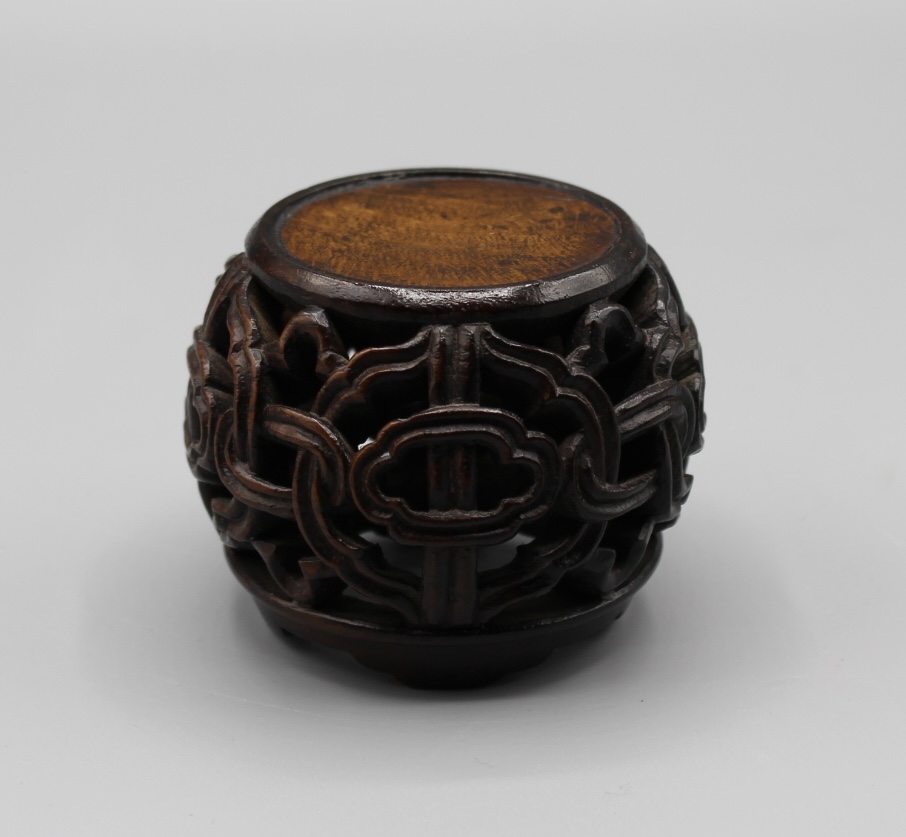 国微型家具历史悠久,在不同的历史时期承载着不同的文化功能。根据历史文献与考古发掘,它们主要扮演了以下几种角色:
文房清供:这是微型家具最风雅的去处。明清时期,文人雅士极度注重书斋的文化氛围与案头陈设。按比例缩小的官帽椅、条案、香几或灯台常被置于书案上,用作印章、奇石、名瓷或文房雅玩的基础底座。
藏家艺术(掌上乾坤):高规格的微型家具往往是手艺大师展现极致匠心的“名片”。由于体量极小,要在几分几厘的微小空间内完成精准的榫卯契合(如粽角榫或霸王枨)以及繁复的透雕,对匠人的眼力与耐心的要求远甚于制作一件足尺家具。
模型与随葬明器:部分微型家具会作为随葬品(明器)入土;或者作为建筑及定制家具的实物比例模型,用于向主顾彰显身份,或用于设计方案的推敲与修改。
独树一帜的微型木制坐墩
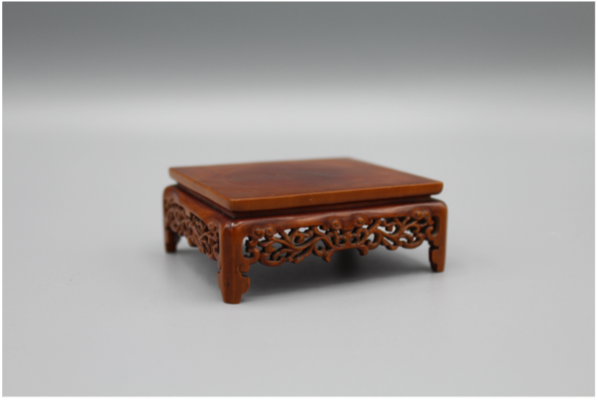 在琳琅满目的微型家具藏品中,最引人注目且最考量鉴赏眼光的,当属微型木制坐墩(传统上亦称坐墩、绣墩或鼓墩)。
在中国古代,为了抵御庭院、园林或亭台之中的风雨侵蚀,真实的足尺坐墩多由青花瓷、五彩瓷或陶器制成。因此,在微型工艺领域,纯木制的微型坐墩极为罕见,其制作难度与收藏价值皆凌驾于其他器形之上。匠人们必须利用温润如玉的硬木,去跨界复制和重现瓷器原有的圆润浑厚轮廓与透雕美学。
这些微型木墩虽然仅高数寸,可纳于掌心,却完美复刻了大木作明清家具的所有核心技术特征:
跨材质的造型与结构复刻:这些微型坐墩多效仿经典的“鼓墩”造型——呈圆筒状,腰部微微隆起。在传统木作中,将坚硬的木料雕琢出流畅、饱满且完美对称的鼓腹线条,需要极高的“旋削与团圆”功底。微型车旋或打磨过程中的任何微小偏差,都会瞬间破坏墩身线条的灵动气韵。
镂空与花窗设计:原版瓷墩的镂空设计本是为了通风,而木制微型版本则将这一设计推向了雕刻艺术的极致。匠人们在狭小的墩身上使用精细的拉丝锯和凿子,开凿出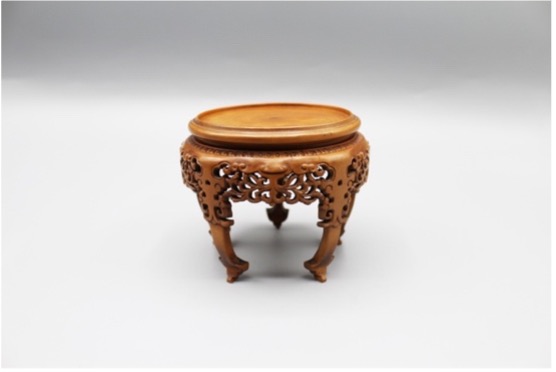 玲珑剔透的图案。
拟真与高古的结构细节(鼓钉纹):仔细观察这些微型坐墩的上下沿,会发现一圈排布均匀的小圆凸起——即“纹饰”或“鼓钉纹”。这一细节源于中国古代在鼓面蒙皮并用钉子固定的传统。在质地密实的硬木上一粒粒手工剔刻出这些饱满圆润的鼓钉,不仅是对高古礼器的致敬,更赋予了这件微型坐具一种三维立体的触觉之美。
绚丽的小香几与名贵硬木
除了坐墩之外,文人书案上最常见的便是微型小香几/小花几,它们对材质的选择有着更为苛刻的标准。为了赋予这些微观杰作以生命,
匠人们高度依赖能够承受微雕工艺的顶级硬木:
黄杨木:黄杨木以结构极度致密、质地坚硬而著称,雕刻难度极大。然而,其细腻的纹理却能成就无可挑剔的微雕细节。经过数十年的赏玩与摩挲,它会包浆出一层迷人的、如琥珀般温润的色调,深受藏家珍视。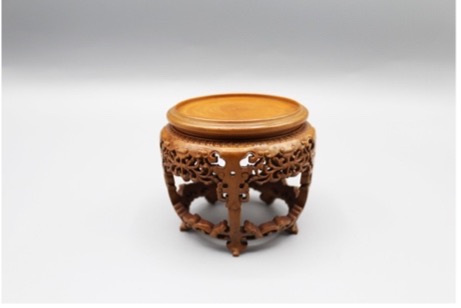
紫檀与红木:在面对最高规格的定制时,手艺大师们会选用紫檀(一种质地密实、色泽深沉的奢华硬木)或红木(传统酸枝木等)。这些材质为微型几案带来了天然的分量感、深邃的光泽和历史的厚重感,确保它们拥有与足尺家具相同的气场。
绚丽纹样:这些小几常常饰有精美的植物或几何图案的低浮雕,例如经典的冬青纹或缠枝莲纹,不断挑战着人类双手在方寸之间所能达到的工艺极限